


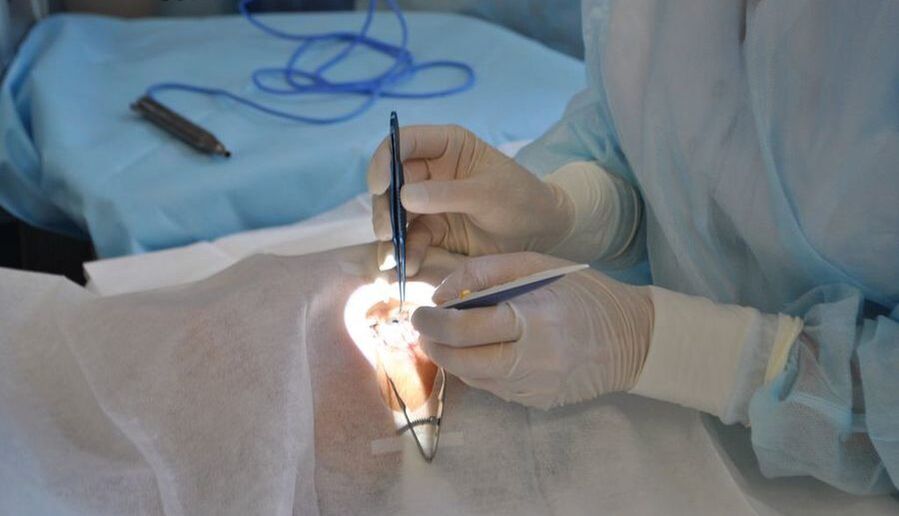
Modern ophthalmology allows operations to be performed in 15-40 minutes.
During surgery, anesthesia is used so that the patient does not feel pain and often no discomfort.
Thanks to modern technologies, most interventions are successful and painless.But such interventions have their own side effects and contraindications.Every person planning to undergo eye surgery should know about them.
Indications for eye surgery
Most people believe that eye surgery is safe, quick and comfortable for the patient.But this view is not always true.
With every ophthalmological intervention there is a risk of pathology and deterioration of vision.The intervention can be unsuccessful and they do not always depend on the ophthalmologist who will perform the operation.
Before the intervention, the patient must carefully assess his condition.Check the information for the selected intervention.Evaluate contraindications and possible side effects.A person must evaluate the possible consequences.Treatment does not always progress smoothly and without consequences.Although in most cases this is true.
Most patients undergo surgery to improve vision for the following pathologies:
- myopia (myopia);
- farsightedness (farsightedness);
- cataract (clouding of the lens).
Eye surgery will allow a person to restore lost visual acuity.The person will again be able to participate in activities that require excellent vision (driving a car, riding a bicycle and in some cases reading books).
If surgery is necessary for a child, parents should weigh the pros and cons.The child cannot make decisions alone.This means that his vision is completely dependent on the choice of his parents.
Scleroplasty
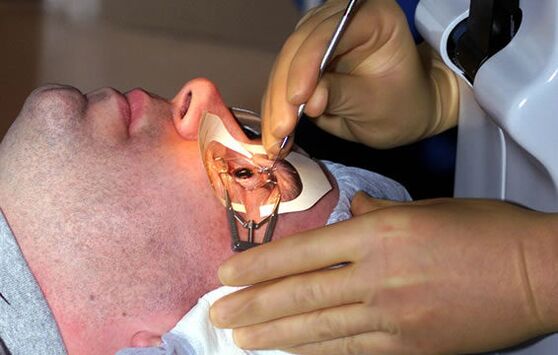
It does not fully restore vision, but prevents the continued decline of visual acuity.It is mainly prescribed for myopia in people over 18 years of age.This is because a child's eye is prone to change (the shape of the eye and its components change).
Therefore, if you "insert" scleral strengthening material into a child's eye, then over time the material will stretch and may lead to deterioration of vision.
Scleroplasty aims to stabilize vision.It is not a corrective intervention.
It takes 20-30 minutes.And it consists of inserting hard-reinforcing material (patient tissue, synthetic polymers, silicone, etc.) into the eye.The material that strengthens the sclera adheres to the outer membrane of the eye.Vision reduction is blocked.
Scleroplasty is prescribed for progressive myopia.In the event that vision correction is prohibited for some reason.
Scleroplasty is not recommended in the following cases:
- childhood (up to 5 years).
- psychosomatic disorders;
- the presence of viral or infectious diseases;
- dystrophy of the visual apparatus.
- allergy or hypersensitivity to scleral reinforcement material.
- allergy to an anesthetic drug.
During pregnancy, this intervention is allowed.However, scleroplasty is still recommended before or after pregnancy.
After surgery, every patient faces a long recovery period.Includes:
- It is not recommended for 1-2 weeks to read books, sit at the computer, watch TV, limit the use of the phone (you can not strain your eyes).
- Do not visit the pool or do sports for 4-5 weeks.
- 2-3 weeks (determined individually) wear glasses with filters from ultraviolet rays (after the intervention there is an acute reaction to light).
- limit vigorous physical activity for 8-12 months.
It is recommended that you follow all of your doctor's instructions.Instill remedial antibacterial drops.Then the recovery period will be favorable and will not suffer negative consequences.
Scleroplasty costs start at $50 per eye.The cost depends on the area of residence, the eye clinic and the qualifications of the specialist.It is important to carefully approach the choice of an eye clinic.Future vision status may depend on this choice.
Vitrectomy
.jpg)
Surgery to partially or completely remove the vitreous (the clear substance that fills the space between the retina and the lens).It is performed by a highly qualified surgeon.It lasts 1.5-3 hours.
Indications:
- vitreous opacity?
- infectious or inflammatory diseases of the inner lining of the eye;
- retinal detachment;
- mechanical injuries leading to dislocation of the lens.
- vitreous hemorrhage.
The patient's vitreous body is removed and an artificial lens is placed in its place.
It is not recommended in the following cases:
- pregnancy period;
- regular or periodic increase in intraocular pressure (glaucoma);
- high degrees of opacity of the lens and cornea.
With vitrectomy, vision is gradually restored.The period of restoration of visual acuity lasts 1-2 months.
If the operation did not go so smoothly or the patient did not follow the doctor's recommendations, complications may arise:
- infectious diseases;
- retinal detachment;
- development of glaucoma (group of diseases characterized by increased intraocular pressure).
- clouding of the cornea or lens.
Prices start at $330.The price depends on the area of residence and the clinic that performs the intervention.Vitrectomy can cost up to $1,660 per eye.
Laser coagulation of the retina
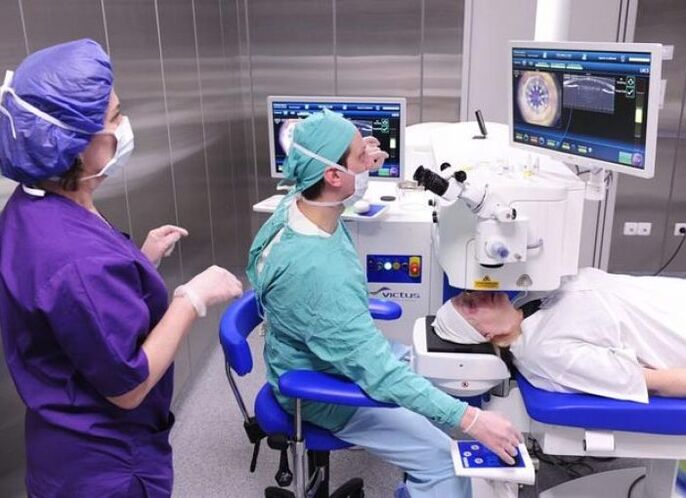
A lens is placed in the patient's eye through which the laser passes.Retinal tears are repaired using a laser.If the gap is not "sealed" in time, it will turn into a retinal detachment.Detachment is much more difficult to treat.Therefore, it is important to undergo surgery in time - laser coagulation of the retina.
Corrects minor retinal detachments (decided individually with each patient).
The intervention lasts 20 minutes.Before that, the patient is instilled with anesthetic drops.
Contraindications:
- blurring of the optical device.
- vascular pathologies (including differences in bleeding);
- reduced visual acuity (with vision of 0.1 not recommended);
- dystrophy of the organs of the visual apparatus.
A complication may occur - corneal edema.Causes temporary visual impairment.But if the surgeon's instructions are followed, the patient's vision is restored.
The cost of laser coagulation of the retina is from $33 to $830.
Strabismus correction
Surgery to correct strabismus usually occurs in childhood.Adults seek such intervention more often in the case of acquired strabismus (strabismus).
Indications:
- strabismus?
- paralysis of the eye muscles.
The intervention allows a cosmetic effect and restores the patient's vision.But vision does not always return fully.After the operation, only half of the vision returns.
Ophthalmologists recommend resorting to this operation only if conservative (non-surgical) methods do not help.This manipulation is an intervention of particular complexity.
The cost is about $330.
Cross linking
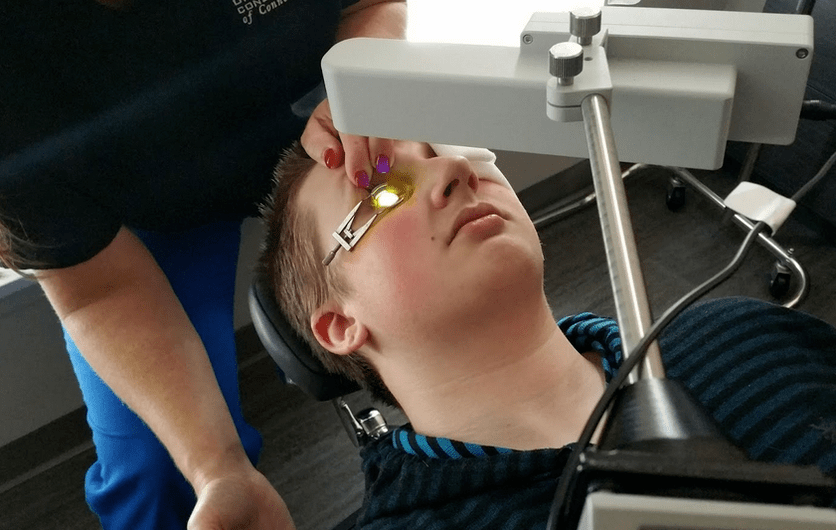
The operation is performed on the cornea (the front convex part of the eyeball).A small thin layer of the cornea is cut.The corneal layer is carefully reinforced.A protective lens is placed on top.Crossing is prescribed in the following cases:
- corneal dystrophy;
- keratoconus?
- keratomalacia?
- "burning" of parts of the cornea.
Contraindications:
- age up to 15 years;
- pregnancy period;
- thin layer of cornea;
- low visual acuity.
The connection takes no more than 1 hour.The patient is in the hospital for 2-3 days.The operation is performed with local anesthesia.The result of the intervention lasts for 8-10 years.
Interconnect prices start at $330.
Glaucoma treatment
Glaucoma is a group of diseases characterized by periodic or continuous increases in intraocular pressure.This surgical intervention is prescribed if the patient does not respond to conservative methods.The operation can be performed at the request of the patient.A person gets tired of constantly instilling drops and taking pills.
Surgery to correct glaucoma is temporary (most of the time).Gradually, the increased intraocular pressure returns to the patient.
During the recovery period, a person must follow all the instructions and advice of the attending physician.Then the result of the operation will last longer and complications will be avoided.
The main complication is the occurrence of infectious and inflammatory diseases.
In general, surgery to treat glaucoma is considered safe.In most cases it is successful.
The cost of laser intervention is from $130.Surgery – from $330.
Waterfall removal
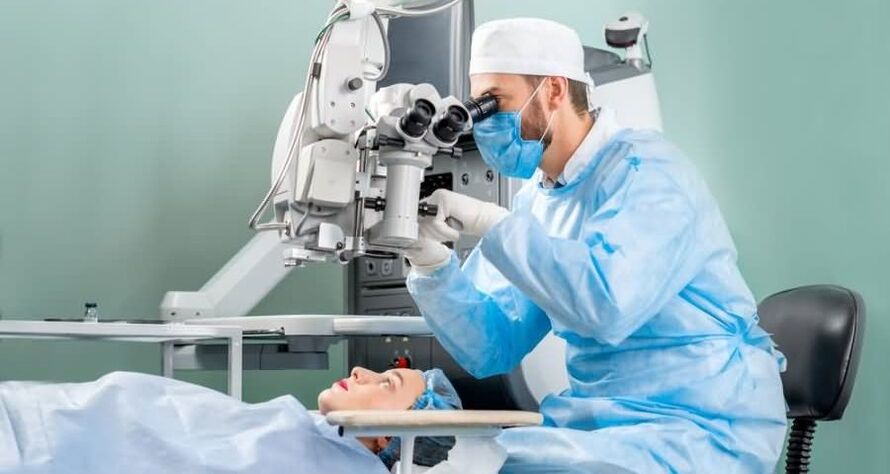
A cataract is a clouding of the lens of the eye.Surgery is performed when conservative treatment methods do not help or in case of severe degrees of disease development.The damaged lens is removed using a laser or ultrasound.
A new artifact is placed in its place.The operation takes 15-20 minutes.
Contraindications:
- period of pregnancy and lactation;
- the presence of infectious eye diseases;
- inflammation;
- psychological disorders;
- syncope;
- age under 18 years (contraindications are determined individually, based on the individual characteristics of the patient).
It is important to observe a recovery period of 1-2 months.Do not do heavy physical activity, do not go to the pool, stop driving (1-2 weeks after the operation).After replacing the lens, you should not rub your eyes.
Within 1-2 months, the lens should "take root" in the patient's body.A person can resume their normal lifestyle.
Cost - from $330.
Laser vision correction
Laser correction is the most popular operation.Made when:
- myopia (myopia);
- farsightedness (farsightedness)
- astigmatism.
It takes 20-30 minutes using anesthetic drops.On the day of laser correction, the patient goes home.1-2 days after the correction, the person will feel discomfort (acute reaction to light, lacrimation, pain).But gradually the discomfort goes away.
Laser correction is contraindicated in the following cases:
- age up to 18 years (determined individually based on patient characteristics)
- infectious and inflammatory diseases;
- progressive state of myopia (farsightedness, astigmatism).
In most cases it is successful.The patient's vision is fully restored.
The cost of laser correction starts at $330.